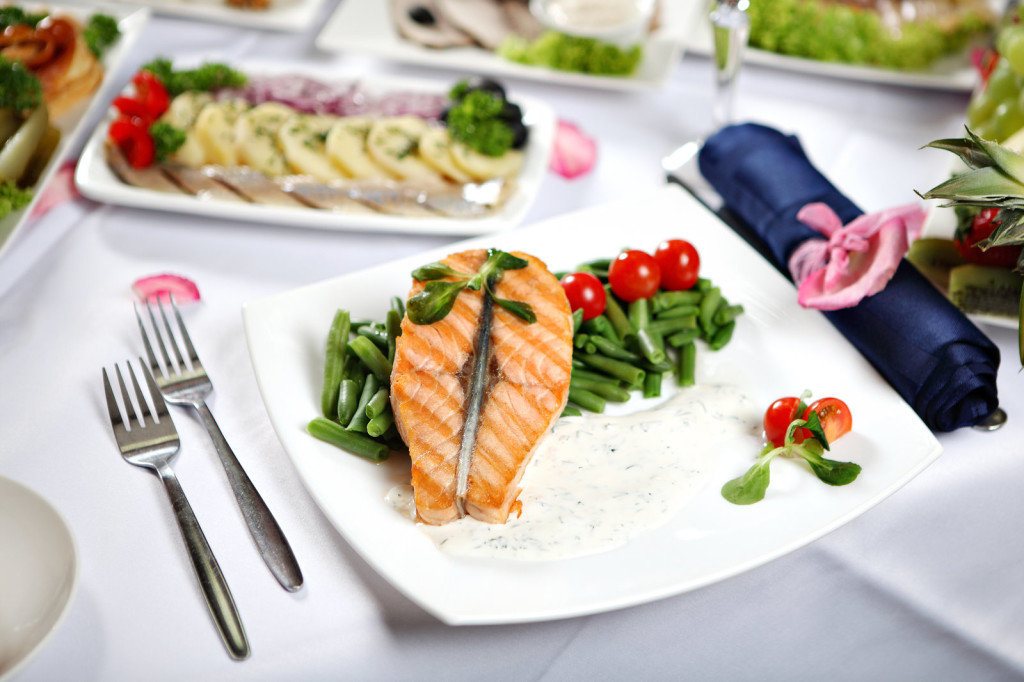
Would you be able to tell if the wild Alaskan sockeye salmon you ordered for dinner was swapped out for a less expensive piece of farm-raised salmon?
For the observant, the color difference between the two would likely be the first giveaway. (Sockeye has a deeper red-orange hue.) Or maybe you’d notice the disparity in the thickness of fillet. (Sockeye is flatter and less steaky in appearance.)
But what if you ordered the most coveted of salmon species — king salmon? (It’s also known as chinook.) Much like farmed Atlantic salmon, it’s light in color, thick in texture and similarly marbled with fat. It’s also significantly more expensive. And according to a new report released Wednesday by conservation group Oceana, it’s a fish about which you’re more likely to get duped — especially if you order it from a restaurant during the winter.
Read the full article on NPR